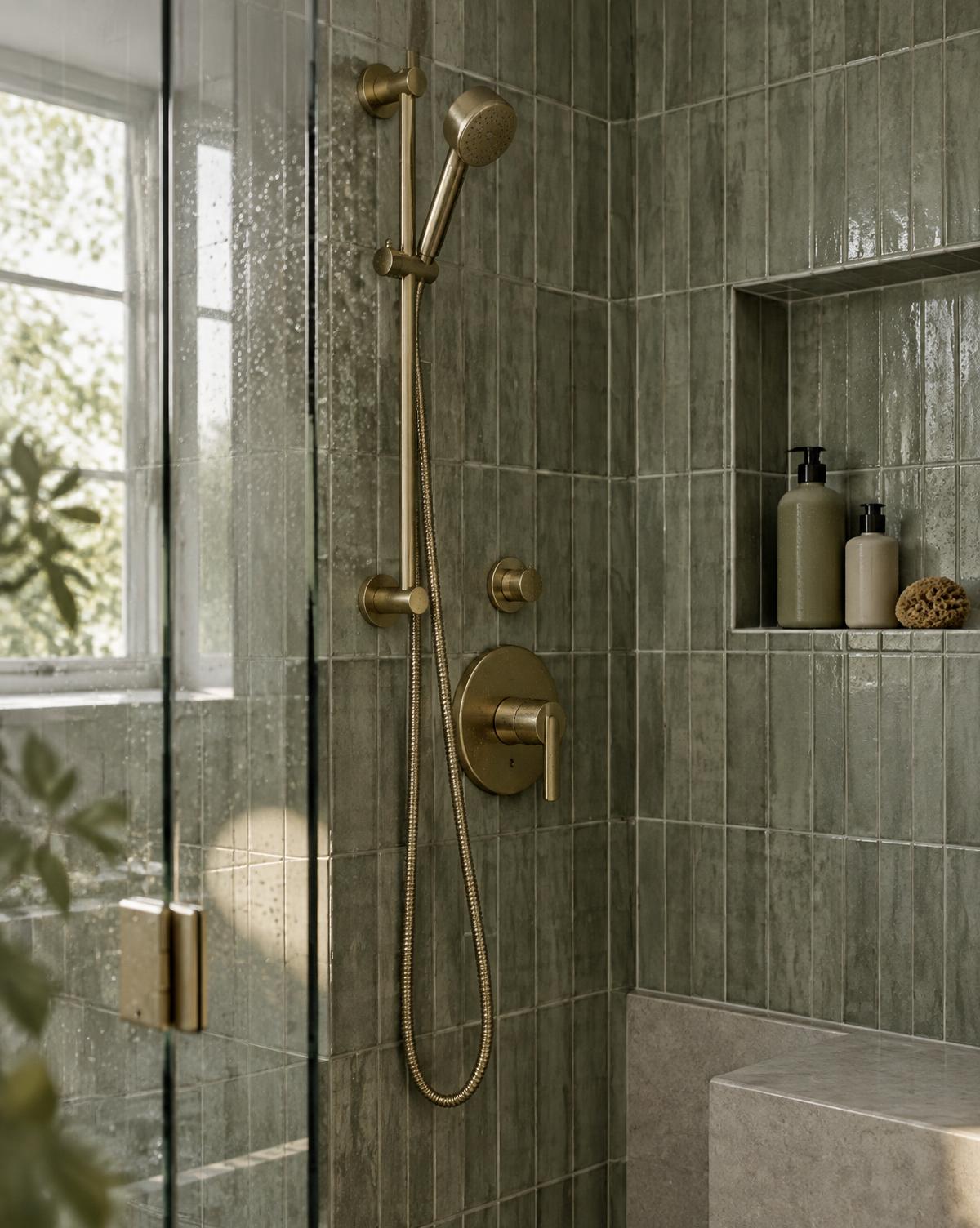
Surfaces
Stained grout, cracked tile, or a base that shows its age.

If the bathroom still works but the shower no longer does, replacing the wet area can dramatically change how the room looks, feels, and functions without automatically becoming a full-bath renovation.
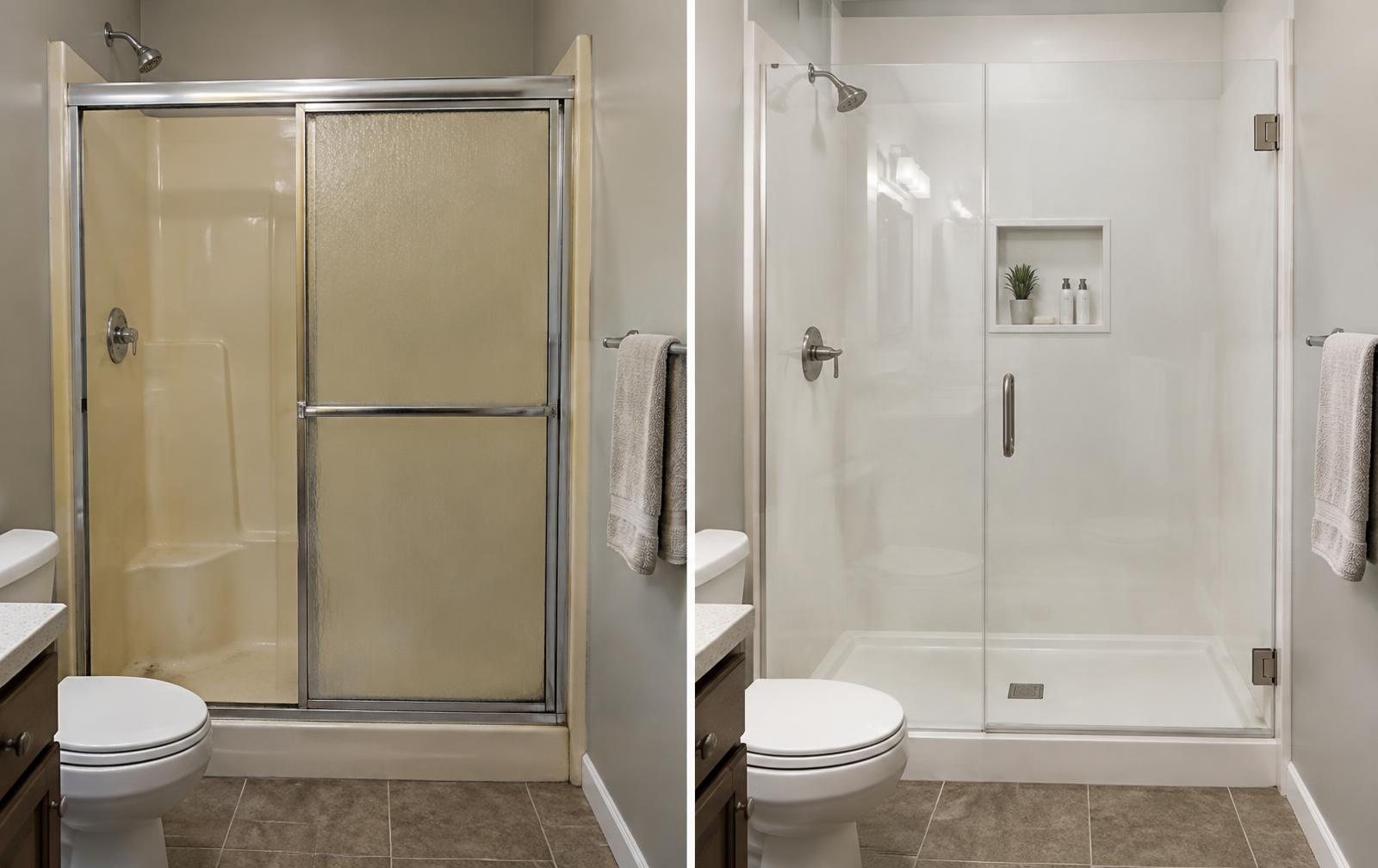
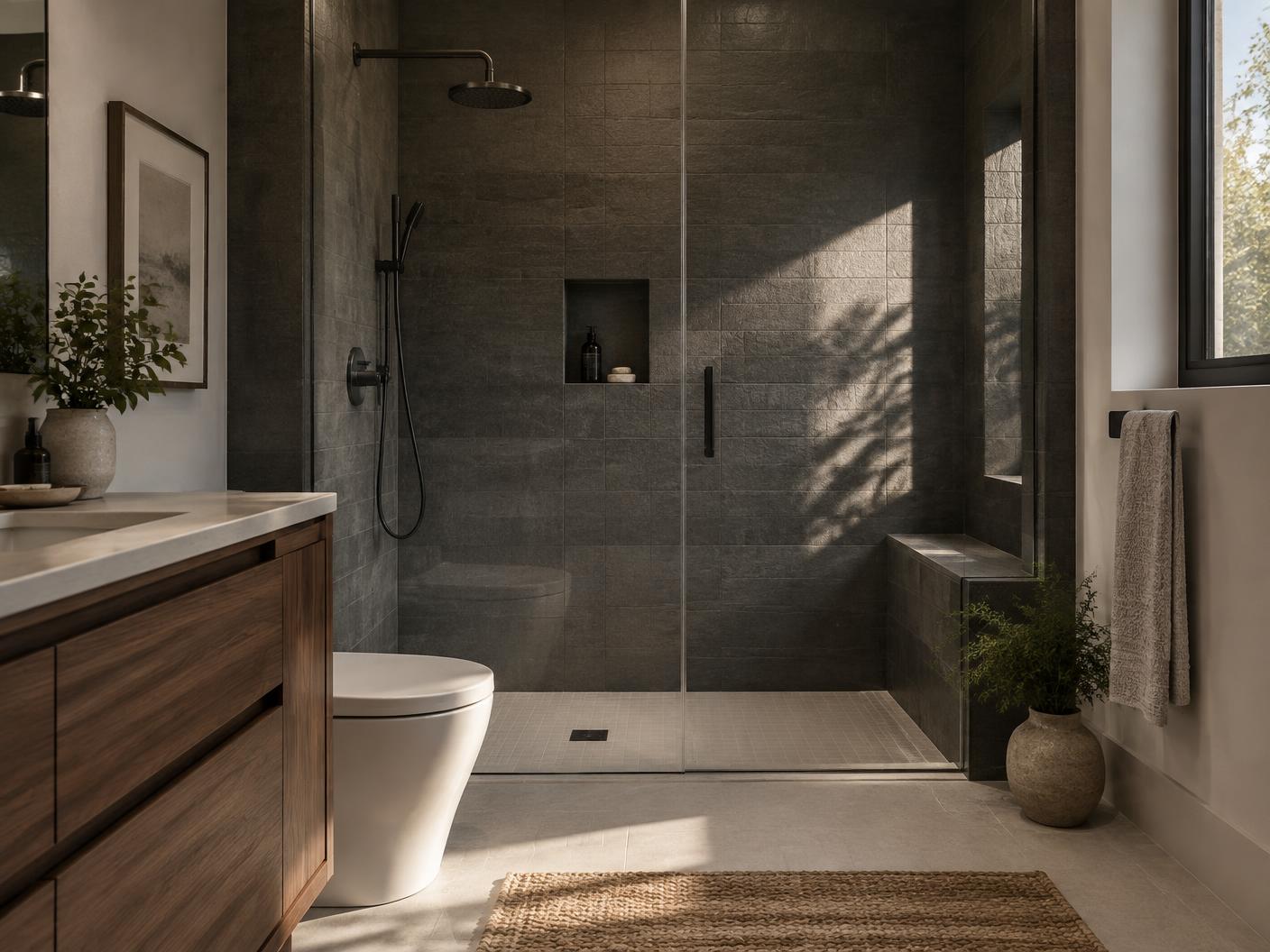
The rest of the bathroom may still work. But worn surfaces, an awkward door, tired fixtures, or poor storage can make the shower feel disconnected from everything around it.
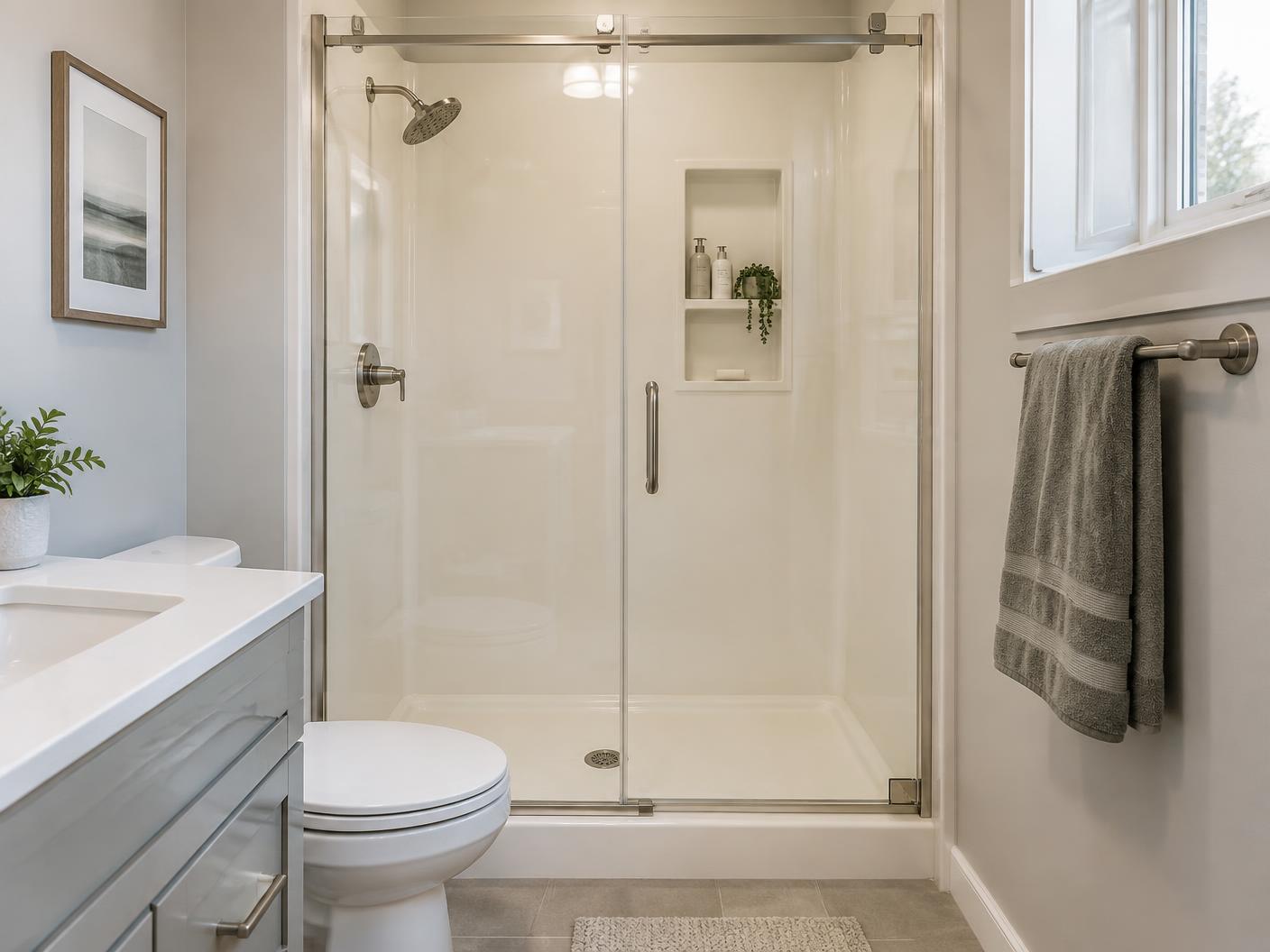
Stained grout, cracked tile, or a base that shows its age.
A framed door that feels dated, heavy, or awkward to use.
Storage, fixtures, and controls that no longer suit the routine.
Staining or suspected leakage that calls for a closer assessment.
Visible symptoms do not always reveal what is happening behind the surface. A professional assessment is needed where leakage or damage is suspected.
Meaningful change does not always require more square footage. Surface, glass, fixtures, storage, and detail can alter the entire impression.
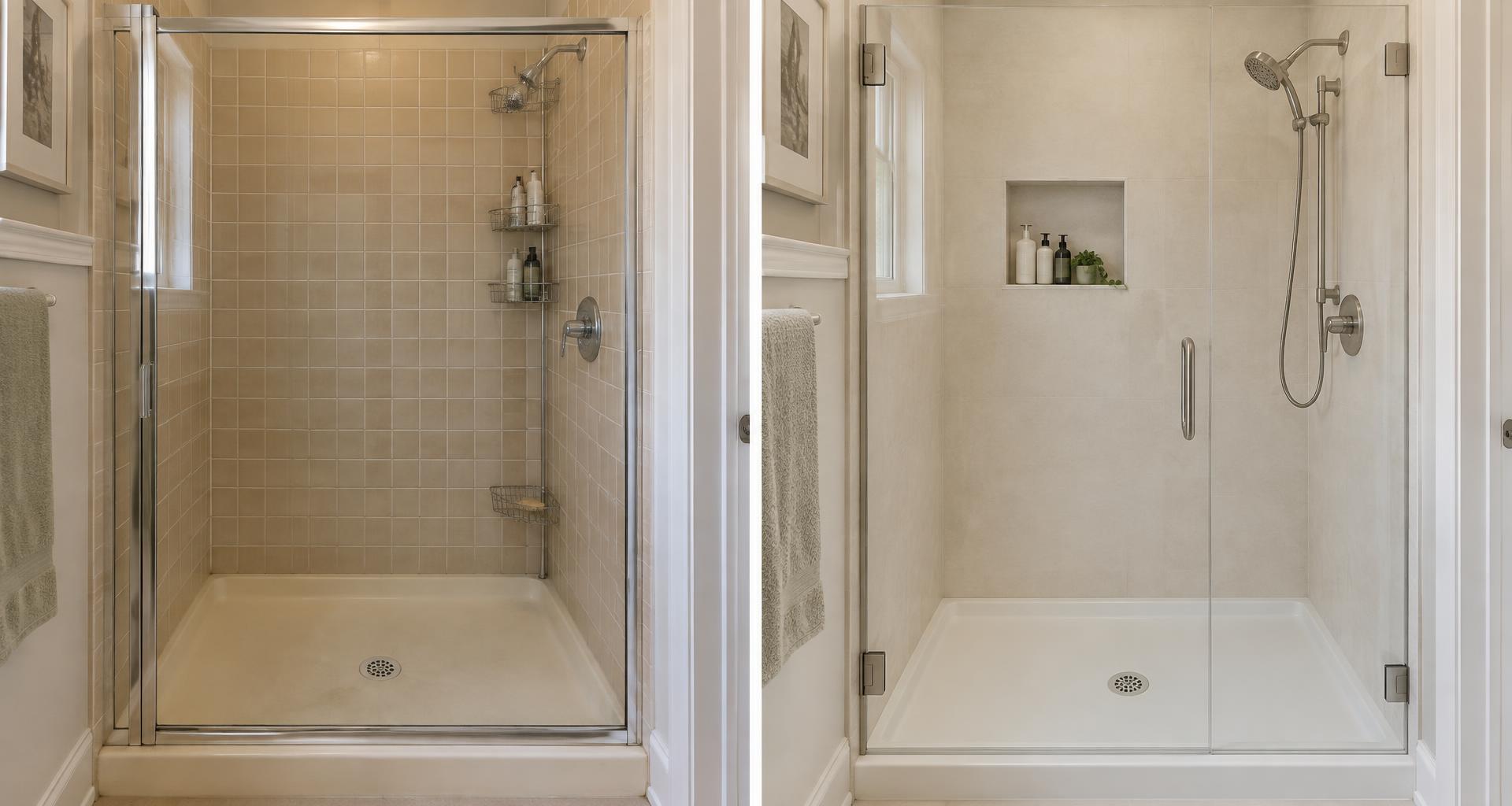 BeforeAfter
Show Me What Could ChangeAmong homeowners updating or adding a shower in Houzz’s 2025 study, 46% kept it the same size.
Houzz — 2025 U.S. Bathroom Trends Study
Depending on the project, replacing the shower can reach well beyond one visible surface.
The shower pan, drain relationship, threshold, and way you step into the space.
Visible wall surfaces and, where conditions require, adjacent waterproofing or substrate work.
The door, panels, opening, and hardware that shape access and sightlines.
Valve and trim, showerhead, handheld, and their placement.
A niche, shelving, seating, or support features where appropriate.
Options may include these elements. A local professional can confirm what should remain and what should be replaced.
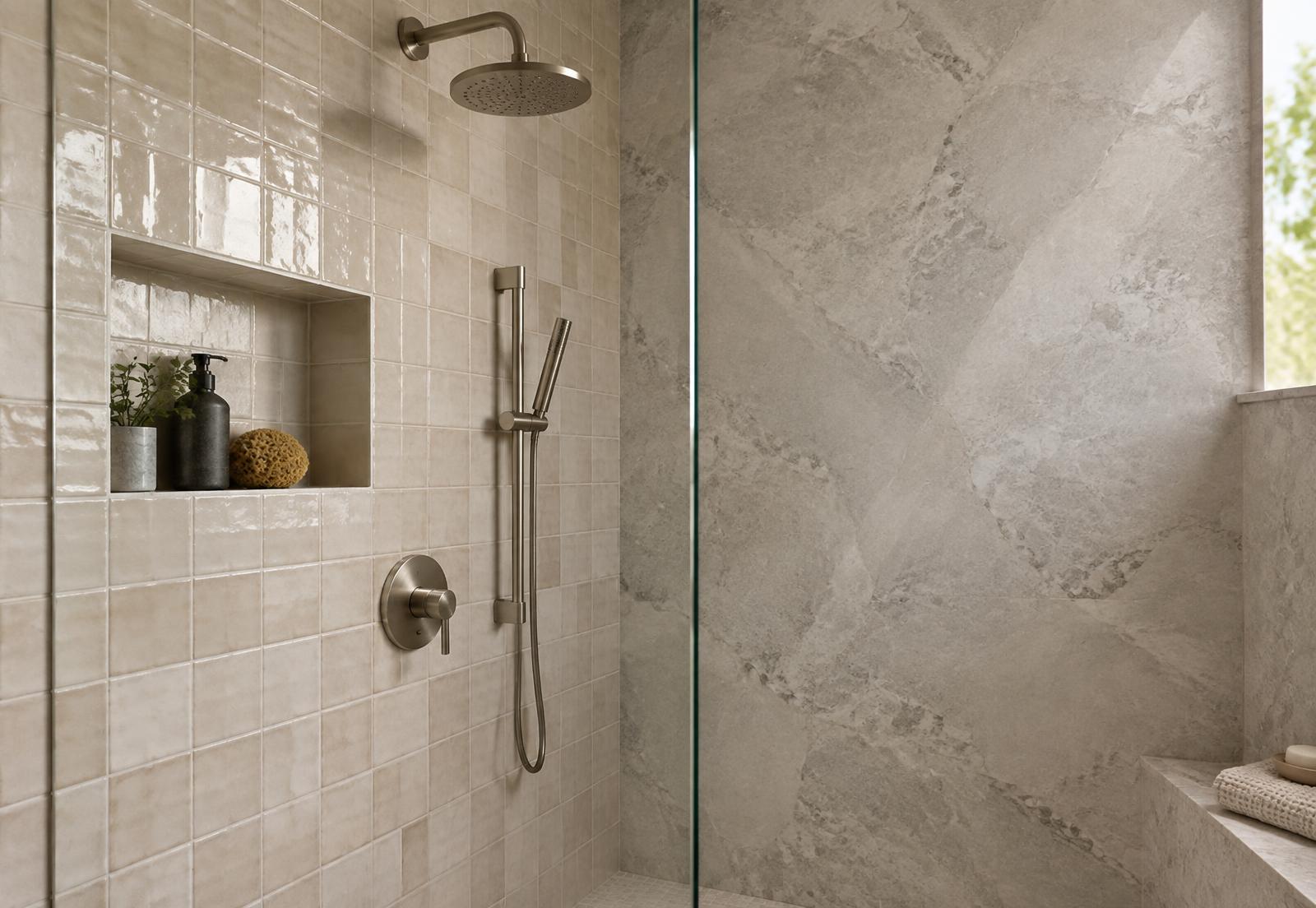
Broad flexibility in pattern, size, and customization, with grout that becomes part of routine maintenance. Installation scope can be more involved.
Fewer joints, simpler routine cleaning, and a consistent surface. Material and design options vary, and not every participating professional offers the same systems.
Refresh the shower while preserving the basic footprint where the existing layout works.
Gain room where adjacent space, plumbing, structure, and layout allow.
A broader change may make sense when walls, plumbing, accessibility, or the surrounding bathroom are changing too.
Different rooms call for different scopes. Expansion is not automatically better, and preserving the footprint does not by itself determine complexity or cost.
Help Me Understand My ProjectA beautiful finish matters. What is behind it matters too.
Removing an existing shower can reveal conditions that affect scope: substrate and wall condition, waterproofing, moisture or water damage, plumbing and drain location, structural support, ventilation, and surrounding finishes.
These conditions are not always present and cannot be diagnosed from appearance alone. A qualified local professional must inspect the room and determine the appropriate work.
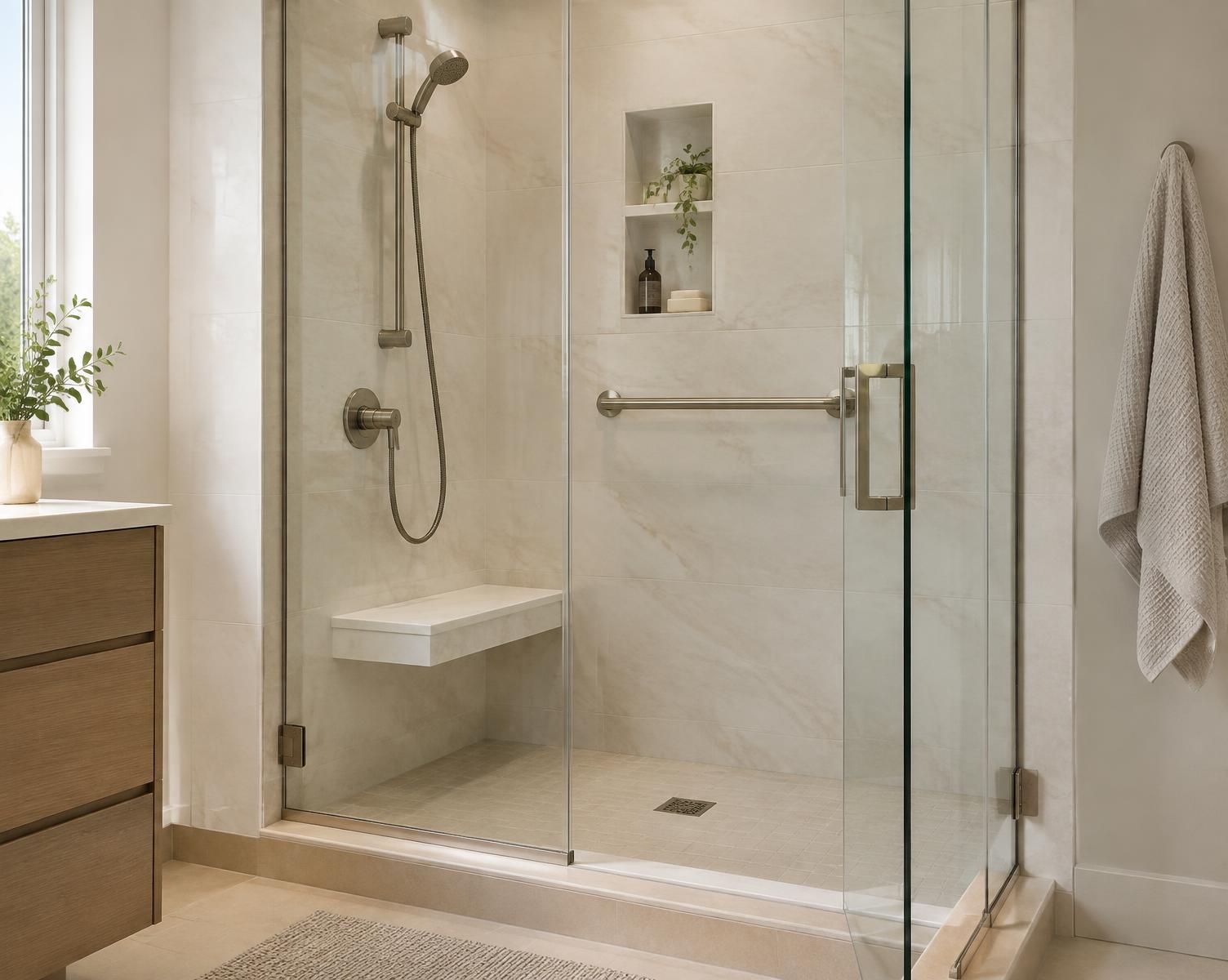
The best replacement is not only newer — it should be easier and better to use.
Door behavior, fixture and handheld placement, niche height, hardware, threshold, seating, and support where desired all shape the daily experience.
The right scope begins with identifying whether the shower is the main problem or one part of a room that needs broader change.
A local professional can help determine the appropriate scope after seeing the room.
Help Me Define My ProjectClear answers begin with the room, the existing shower, and the scope you want to understand.
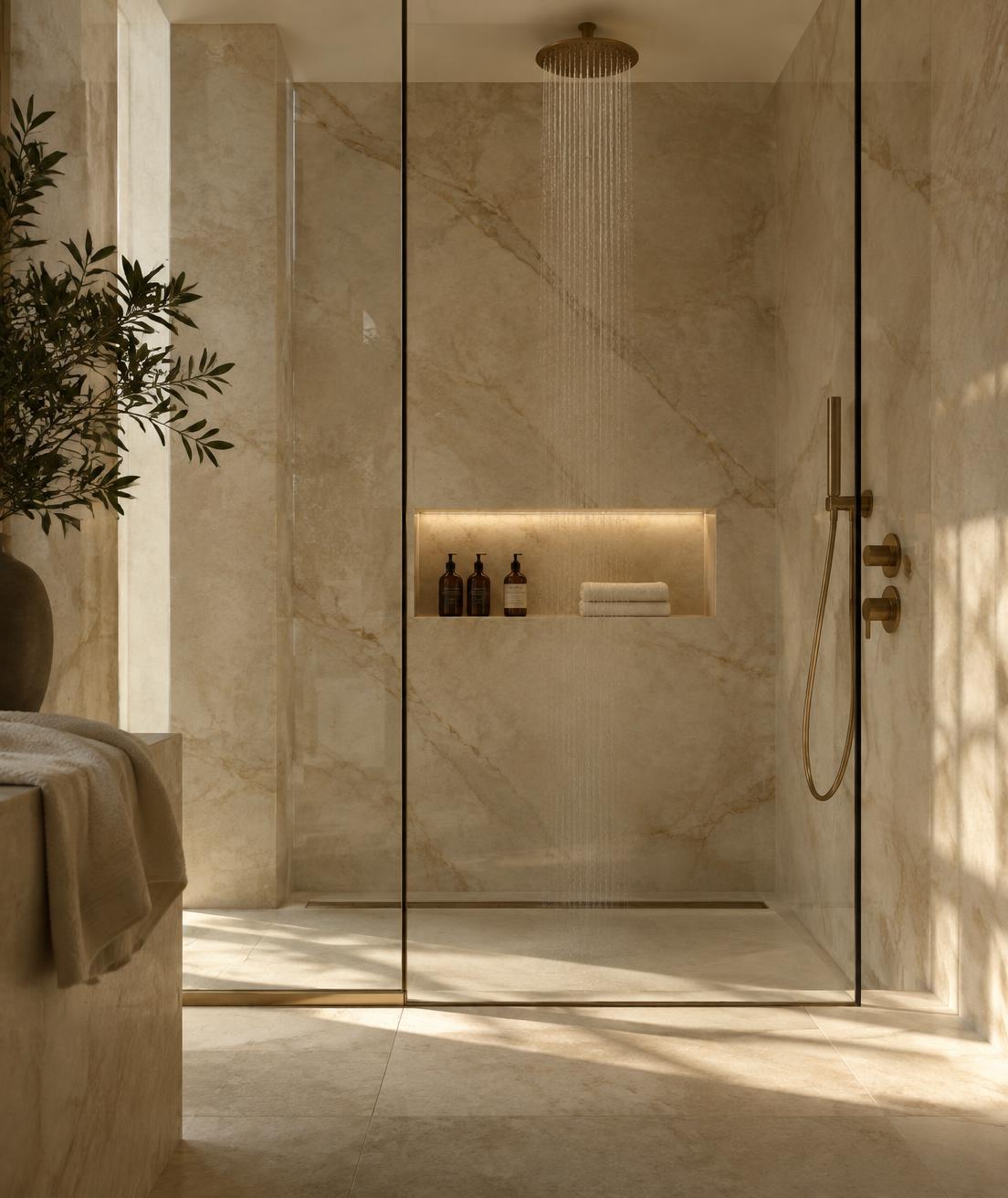
Tell us what is no longer working about your current shower and begin exploring replacement options with professionals serving your area.